

Air pollution in Malaysia is no longer a foreign issue. Over the past decades, Malaysia has been growing in terms of its industrialisation and urbanisation. This is due to the aim of becoming a developed country in the near future.
Air Pollution in Malaysia: What are the causes?
There is this one study in 2018, by a chemistry and pollution expert, Prof Dr. Mohd Talib Latif from University Kebangsaan Malaysia (UKM). In the study, he stated that the spike of air pollutants these days was mainly due to the increasing of industrialisation in Malaysia. Plus, when we talk about air pollution in Malaysia, we will directly think of the haze, right?
Nonetheless, have we actually noticed that today’s air quality is not as clean and refreshing as before? If you are thinking so, here are some contributors to the air pollution in Malaysia which might influence the bad air we breathe in today:
1. Increasing of Industrialisation
The era of social and economic growth where the human community evolves from an agricultural society to an industrial society.
2. Transboundary Haze
Seasonal air pollution impacting the Southeast Asian countries, particularly Malaysia, Singapore, and Indonesia. This is usually due to forest and peat fires that occur in Indonesia during its season. As a result of the smoke reaching the troposphere, it will cause transboundary haze.
3. Combustion
A chemical oxidation process where the burned fuel reacts with oxygen to release energy in a combustion reaction.
4. Vehicle Omissions
Gases, fumes, vapors, and odors escaping from vehicle’s cylinders of a gasoline or diesel internal combustion engine.
5. Open Waste Burning
A rather common activity due to lack of waste collection systems. Usually found in large landfills, small or distant dumpsites, or even individual homes.
Air Pollution in Malaysia: past issue we can look into
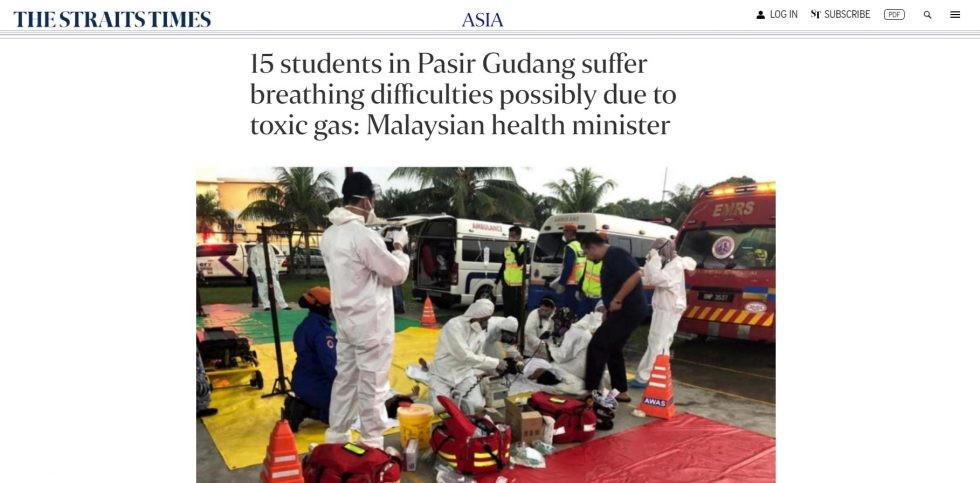
To dig deeper into this air pollution issue in Malaysia, let us go through one of the past issues which we can learn from. Some may know this story, but some may still have zero ideas about it.
To summarize, this alarming situation was actually reported on the 20th June 2019 which was still quite fresh and recent. Around 15 students from a religious school in Pasir Gudang, Johor had experienced sudden respiratory problems and vomiting. They were presumed as a result of harmful gases exposure. And according to hazardous material experts, the symptoms point to a deadly gas as its prime cause. In fact, the case was almost alike to the Sungai Kim Kim incident.
Why do we need to avoid air pollution in Malaysia?

Based on the above incident, do you think it is important for us to help reduce the air pollution risks in Malaysia? If you answered yes, well this reading is definitely for you!
Day by day, human health is harmed by poor air quality. When we learn science in school, we will understand how an exposure to air pollution can affect our health system. So here are some further reasons on why you too should contribute to reduce air pollution in Malaysia.
1. Polluted air is putting people’s health in jeopardy.
Today’s air pollution is, without a doubt, a global public health emergency. Everyone is at risk, from unborn babies to children at school, mothers, the elderly, and not forgetting those who are with respiratory or cardiovascular diseases, as they are known as the most disadvantageous groups among all.
2. The linkage between pollution and poverty.
In developed countries, for instance, 29% of the cities do not comply with their organization’s requirements. And out of all people, the poorer neighborhoods are generally the most vulnerable because the location of their factories, incinerators, and busy roads are usually placed near to these poor suburban communities.
3. It is a human right to have access to clean air.
Human rights, yes! We have every right to clean and fresher air as they are incorporated in the Universal Declaration of Human Rights and the International Covenant on Economic, Social, and Cultural Rights, as well as the Sustainable Development Goals in their entirety. So why are we settling for less? Let us hand in hand contribute ourselves to help the world be free from polluted air soon.
If there are complaints, whose responsibility it is to handle them?
In Malaysia, authorities such as the Department of Environment (Jabatan Alam Sekitar) will take charge. Here are some recent issues regarding air pollution in Malaysia.
1. BENTONG, PAHANG (26/08/2021)
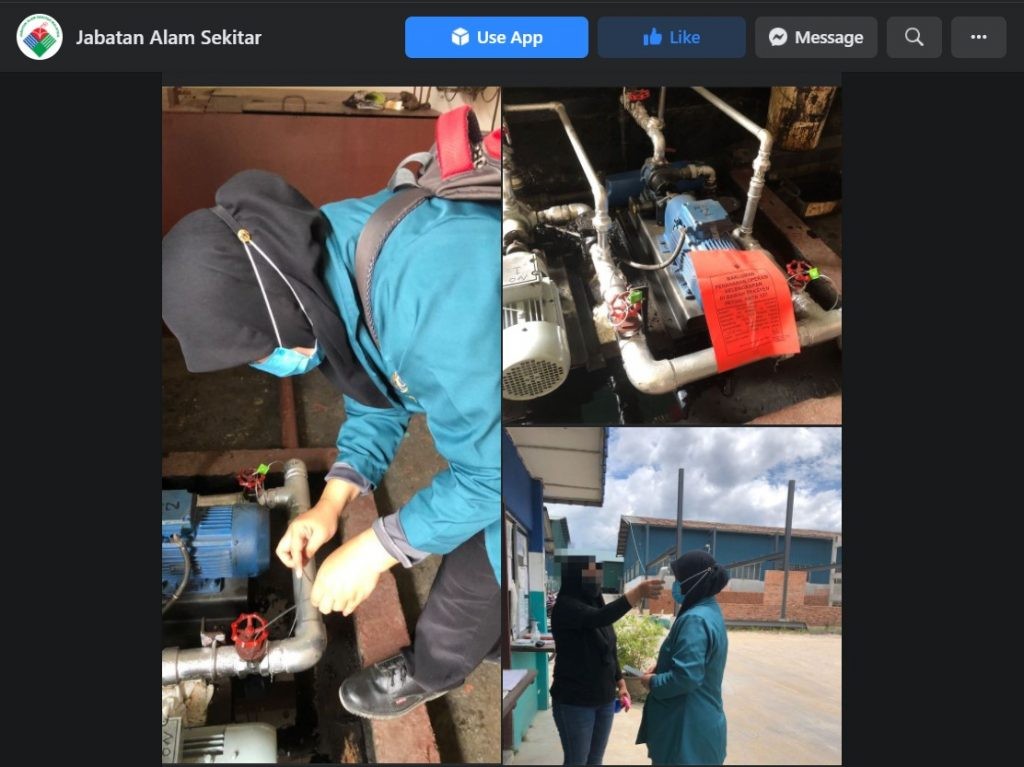
FOLLOWING COMPLAINTS ON AIR POLLUTION – FIRE COMBUSTION EQUIPMENT CONFISCATED on 25/8/2021, BENTONG, PAHANG – Following complaints by people, fuel combustion equipment (boiler) from a paper refinery in this area has been confiscated under Section 38 (1), Environmental Quality Act 1974 due to the refinery’s non-compliance with the Environmental Quality (Clean Air) Regulation 2014. The refinery needs to take corrective measures to ensure future compliance with the requirements of the regulations.
2. SEPANG, SELANGOR (14/08/2021)
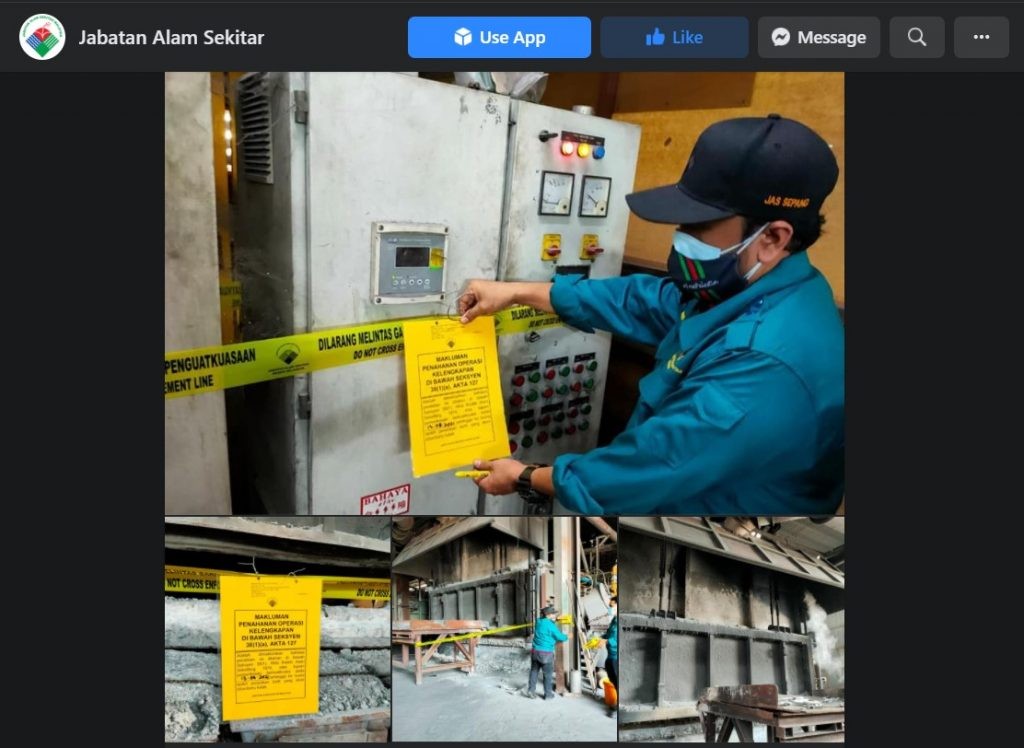
DUE TO THE FAILURE OF AIR POLLUTION CONTROL EQUIPMENT (AKPU), THE FACTORY WAS SUBJECT TO EQUIPMENT OPERATION DETENTION ACTION on 13/8/2021, SEPANG, SELANGOR – A factory carrying out aluminum smelting activities in Telok Panglima Garang, Kuala Langat today was subjected to an Equipment Operation Detention (POK) notice under Section 38(1)(a), Environmental Quality Act 1974 by JAS Sepang branch due to failure of air pollution control, causing dust pollution to the nearby areas. Based on the record, the offense is a repeated offense, and the premise is now facing more stringent action without any compromises.
Fun fact: Are there any places in the world free from air pollution?
Did you spot any of your favorite countries on the list? We recommend you go on and watch the YouTube video here for a further extended list of countries with the best, cleanest air and water!
How is Malaysia’s air quality?
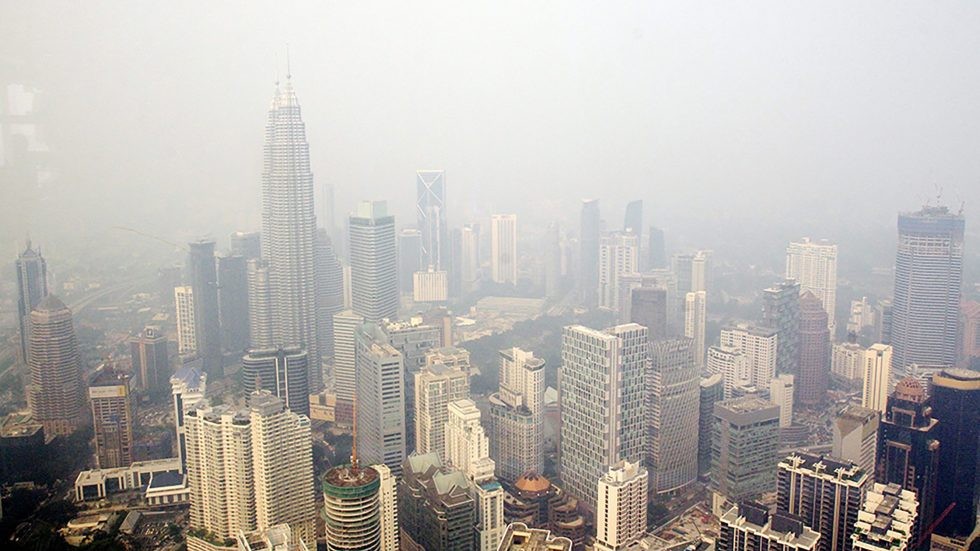
Most countries in the world use the term Air Quality Index (AQI) in monitoring their countries’ air quality. However, in Malaysia, we use the term Air Pollution Index (API) to define our air quality here. According to TheStar, due to urbanisation, increasing industrialisation and haze that frequently hits Malaysia have made the air quality to be considered as worsening.
How does Malaysia’s Air Pollution Index (API) guideline work?
The scale included below shows the health classifications used by the Malaysian government in terms of the Air Pollution Index (API) range for your reference.
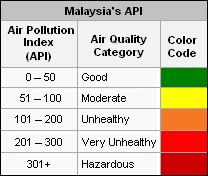
Further elaboration of the above category and colour-coded bars:
Good – Green implies the satisfactory state of the air which means, all activities outdoor are fine.
Moderate – Yellow implies that the air quality in Malaysia is still acceptable and does not pose any bad effect on one’s health.
Unhealthy – Orange implies that air quality is worsening, and the pollutants may affect certain groups. Therefore, those who are in high-risk condition shall lessen any activities outside.
Very Unhealthy – Red implies that the air may affect and worsen one’s health condition. Everybody should stay indoors, especially those with a poor health condition (experiencing heart, or lungs complication) shall not go outside at all.
Hazardous! – Dark brown/red implies that the air pollution is too high and risky for people to be outside.
When is air quality considered bad?
It is safe when air quality is below 50, therefore you can spend more time outside without risking your health at all. However, as the Air Pollution Index (API) increases, you should slowly reduce your activities outside as the API may rapidly increase in a blink of an eye.
Air Pollution in Malaysia – Why do you need a consultant?
In 2020, there are a total of 3 cases reported for air pollution under section 28(a) (Open Burning) and 22(1) (Black Smoke Emission Greater Than Specified Standard) of the Environmental Quality Act, 1974. If your business is likely to be under the DOE’s radar, you might want to consider getting expert advice from a qualified EIA consultant organization.
 Velcro Envirotech Sdn Bhd (VETSB) is an independent company offering a workable, manageable, achievable technical solution to various environmental challenges. Our technical team and consultants have more than 20 years of experience in environmental pollution control engineering and waste management.
Past project: Tanjung Agas Industrial Area, Pekan, Pahang – An essential source of an extensive range of natural habitats and rich in biodiversity. Consider the impact on the existing and nearest sensitive receptors; it gives a significant challenge in controlling its effects on the ecosystems. VETSB undertook a comprehensive environmental study to address the predicted impact and pollution prevention before its commencement. That includes the preparation of Terms of Reference, Environmental Impact Assessment (EIA) for Schedule 1 and 2, and Environmental Monitoring (EM).
Should you have further enquiries, you may contact Cik Haza (017-5004744) to arrange an appointment. Feel free to read more articles featured in our blog here.
This article is for public general information purposes only. It is not meant to be used or constructed as advice in any manner.