

Waste management in Malaysia is one of the crucial areas that industrial sectors should be concerned about. Regardless of the types of waste produced, proper procedures for handling waste management in Malaysia must be followed at all times. In Malaysia, the Department of Environment (DOE) is an agency accountable for the regulation of industrial waste. In this entry, we are going to focus on “scheduled waste”, or also known as “hazardous waste”.
What is “scheduled waste” in the context of waste management in Malaysia?
According to DOE, “scheduled waste” means any waste falling within the categories of waste listed in the First Schedule of Environmental Quality (Scheduled Wastes) Regulations 2005. Refer to the image below to see the 5 groups of scheduled waste. 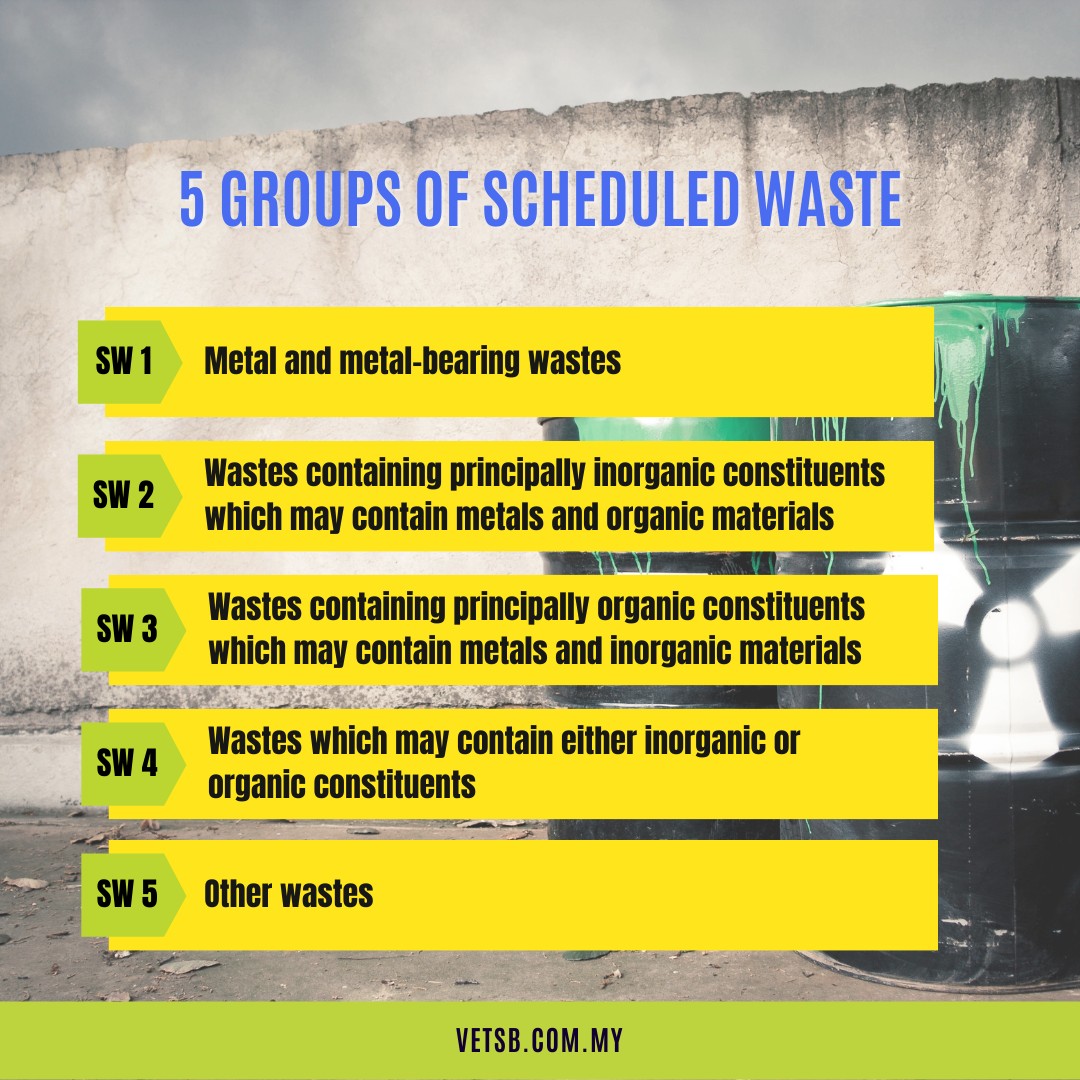 In total, from group SW 1 to SW 5, the number of scheduled waste codes is 77.
Do you know that there are high chances that we might have been exposed to any of the hazardous waste?
Some examples of hazardous waste around us include (SW 103) waste of batteries containing cadmium and nickel, or mercury or lithium, (SW 417) waste of inks, paints, pigments, lacquer, dye or vanish, and (SW 311) waste of oil or oily sludge.
Why waste management in Malaysia is important?
First of all, do you know that Malaysia has been producing tonnes of scheduled waste annually? The Compendium of Environment Statistics, Malaysia 2020 by the Department of Statistics Malaysia’s (DOSM) discovered that 4.0 million tonnes of scheduled wastes were generated in 2019. That’s a huge amount of hazardous waste! In fact, Selangor contributed most to the statistics with 1,019.9 thousand tonnes, which is about 25.4% of scheduled waste in that year. 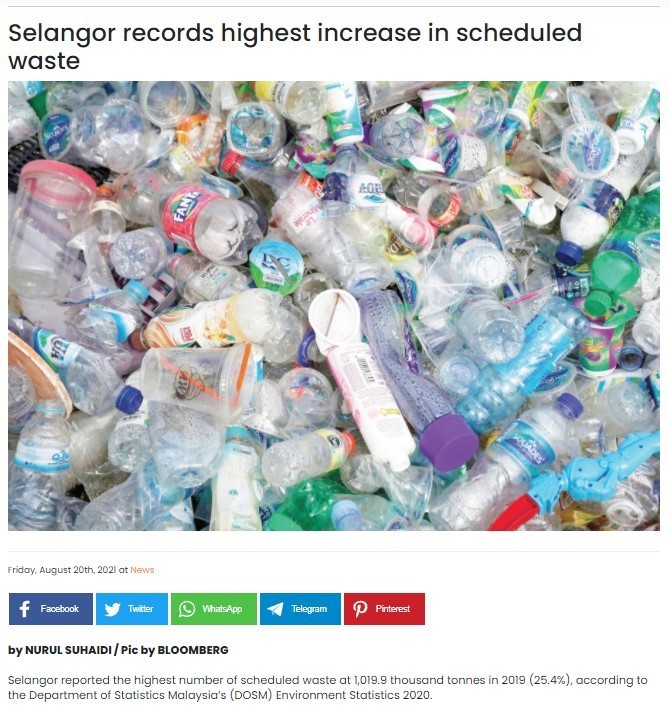 As compared to other states, Selangor also recorded the highest amount of clinical wastes, which is 7.3 thousand tonnes. If those percentages keep on increasing in the future years, we might be in danger. While industry plays a significant role in contributing to economic growth, it is also vital to acknowledge the importance of having proper waste management in Malaysia. We must learn the lessons from the past tragedies, like what had happened in Love Canal, US, Sydney Tar Ponds, Canada, and Kim Kim River toxic pollution.
The Love Canal Disaster, US, 1978
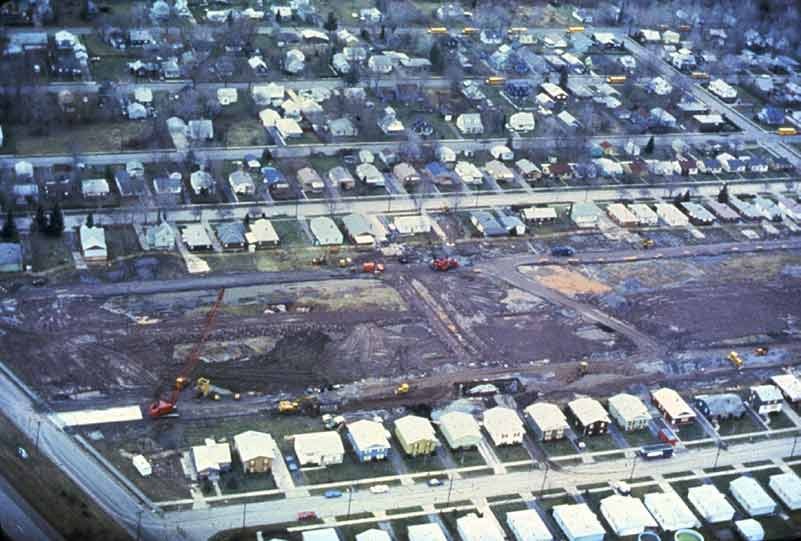 Back in 1978, the world is shaken by a disaster that happened in a neighbourhood named Love Canal. Located near Niagara Falls in upstate New York, this place was an abandoned canal project planned by William T. Love in 1834. He intended to use the water from the river to generate power to be used by the neighbourhood. However, starting in the 1920s, the canal was used as the municipal and industrial chemical dumpsite. With government sanction, the Hooker Chemical Company dumped chemical waste in the partially dug canal from 1942 to 1953. The land was then sold and turned into a working-class neighbourhood of around 800 single-family homes. A school was also built there. Sadly, none of the residents knew that their neighbourhood was filled with hazardous waste consisting of about 21,000 tons of toxic chemicals, with at least twelve are carcinogenic substances. The tragedy began when the winter season caused the chemicals to leach into the residents’ backyards. Besides, The New York State Health Department discovered a series of obscure diseases. For example, epilepsy, nephrosis and abnormally high rates of miscarriages. To solve the issues, all of the residents were evacuated from the area. After that, the Superfund program was established in 1980 to pay for the costs of cleaning up the toxic sites. This tragedy has also been listed in the Top 10 Environmental Disasters by TIME, an American news magazine and news website. It might happen again anywhere including in our country, thus following the proper waste management in Malaysia is a must for industrial sectors.
Sydney Tar Ponds, Canada, 1980
/https://www.thestar.com/content/dam/thestar/news/2007/01/28/sydney_tar_ponds_to_be_buried/sydney_tarponds.jpeg)
Source: https://www.thestar.com/news/2007/01/28/sydney_tar_ponds_to_be_buried.html
The above image depicts one of Canada’s worst toxic waste sites, Sydney tar ponds and coke ovens consisting of about 750,000 tons of toxic chemical waste. Situated on Cape Breton Island in Nova Scotia, this area was polluted for about a century due to chemical waste from the steel industry, Sydney Steel Corporations. Consequently, the residents developed inexplicable and chronic illnesses, including dominating the cancer rates in Canada. The cleanup project began in the 1980s and was accompanied by various challenges. In 2014, it was declared complete with the spending amount of 400 million Canadian dollars. The tar ponds were finally turned into a park known as Open Hearth Park. Overall, hazardous waste has led to numerous problems in the environment. Hence, industrial sectors in our country should learn from this incident by always making sure to comply with the proper scheduled waste management in Malaysia.
Kim Kim River toxic pollution, 2019 – The result of improper waste management in Malaysia
Do you still remember the case of Kim Kim River toxic pollution that recently happened in 2019?
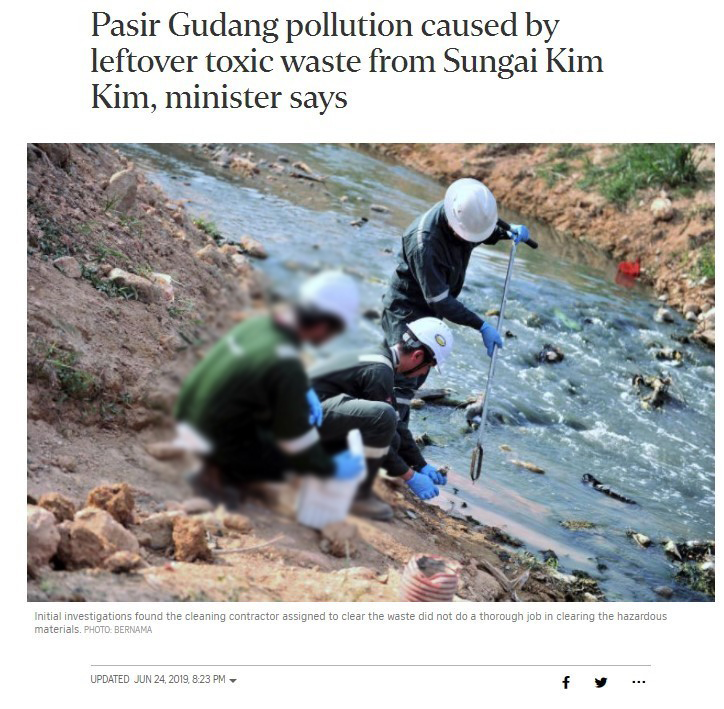 Although guidelines related to scheduled waste management in Malaysia has been established, illegal dumping still happens in our country due to irresponsible acts of certain parties. For instance, in March 2019, there was an incident whereby the Kim Kim river was polluted with hazardous waste. It has caused serious impacts on public health, whereby 111 schools in the Pasir Gudang district were closed for two weeks. About 6000 people were affected after inhaling the toxic fumes with 2,775 victims receiving immediate treatment, while 8 were treated in the Intensive Care Unit (ICU). Apparently, the pollution was caused by a used tyre processing factory. Luckily, the authorities took fast action to prevent the pollution from getting worst. Eventually, in that March, the main suspects were charged at the Johor Baru court with 15 offences under two environmental regulations. This has proven that the issue of waste management in Malaysia is seriously treated. The above 3 tragedies have clearly shown the adverse impacts of improper handling of scheduled waste. Not only the environment was damaged, but also the public health and socio-economic development were affected. Hopefully, waste management in Malaysia will always continue to be a serious matter that government looks into.
Waste management in Malaysia – Why do you need a consultant?
In 2020, there are a total of 29 cases reported for scheduled waste under section 34(b) (Scheduled Waste) of the Environmental Quality Act, 1974. If your business is likely to be under the DOE’s radar, you might want to consider getting expert advice from a qualified EIA consultant organization.  Velcro Envirotech Sdn Bhd (VETSB) is an independent company offering a workable, manageable, achievable technical solution to various environmental challenges. Our technical team and consultants have more than 20 years of experience in environmental pollution control engineering and waste management in Malaysia. Past project: Century Motolite Battery – Used Lead Acid Battery Plant at Siputeh, Perak. The plant recovers the waste of lead-acid batteries (SW102) that require complex and susceptible processes. Therefore, it needs to go through a tedious approval process by the Department of Environment (DOE). We come up with the best possible solution by providing our client with the Environmental Impacts Assessment (EIA) services, and they have now successfully received approval from the DOE. Should you have further enquiries, you may contact Cik Haza (017-5004744) to arrange an appointment. Feel free to read more articles featured in our blog here. References:
- Official Portal of Department of Environment (2021). Frequently Asked Questions About Scheduled Wastes. Retrieved from https://www.doe.gov.my/portalv1/en/info-untuk-industri/maklumat-umum-buangan-terjadual/soalan-lazim-mengenai-buangan-terjadual/392
- Department of Statistics (2020, November 27). Compendium of Environment Statistics, Malaysia 2020 [Press release]. Retrieved from https://www.dosm.gov.my/v1/index.php?r=column/pdfPrev&id=TjM1ZlFxb3VOakdmMnozVms5dUlKZz09
- Trudell J. (n.d.). Sydney tar ponds. Environment & Society Portal. Retrieved from https://www.environmentandsociety.org/tools/keywords/sydney-tar-ponds
This article is for public general information purposes only. It is not meant to be used or constructed as advice in any manner.